
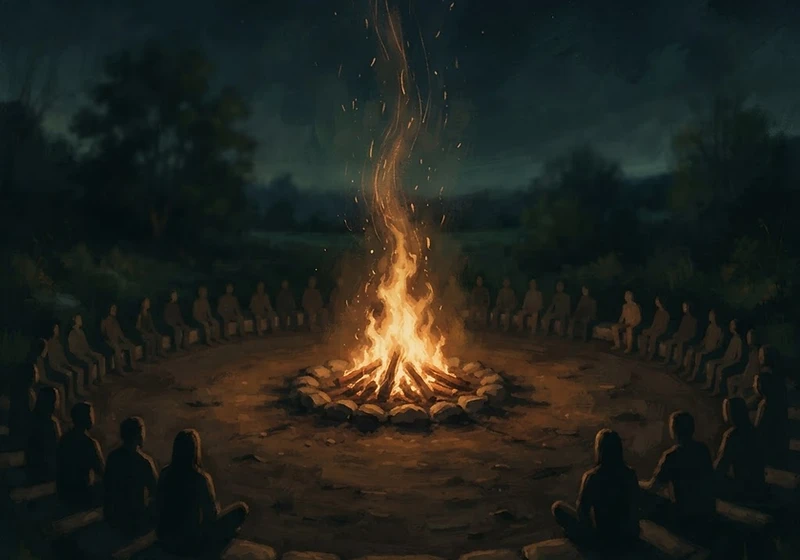
The Great Law of Peace
An untold blueprint for democracy, responsibility, and peace - carried in oral memory and wampum for centuries before 1776.
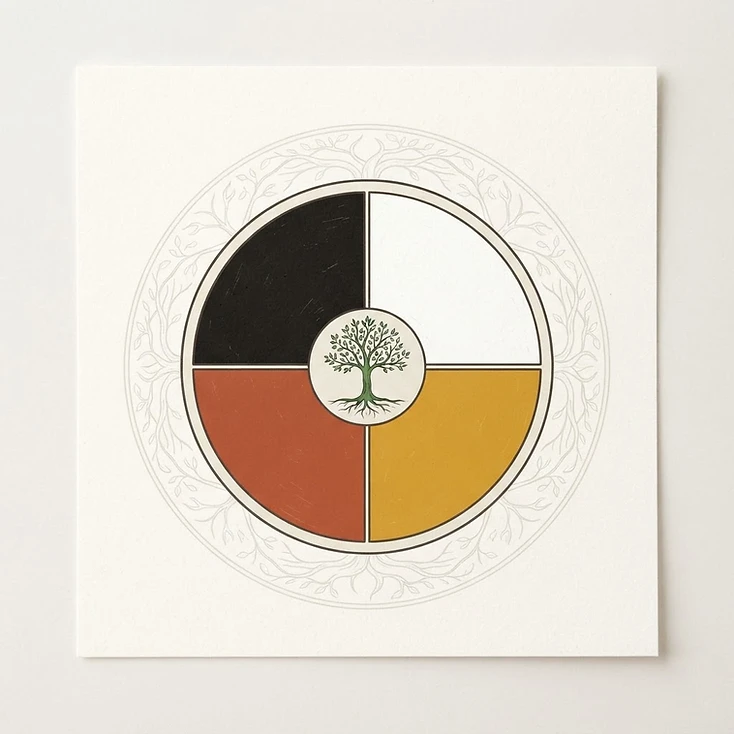
Bringing community around the hoop of life
Tree of Light is an Indigenous-led nonprofit reviving traditional practices, building civic engagement through Indigenous-based models, and connecting education, healing, and regenerative systems.
We carry the Great Law of Peace as an open, participatory constitution grounded in Natural Law - a living relationship among people, land, spirit, and the generations yet to come.
What does the Great Law of Peace have in common with the ideals of modern government and communities - and what changes when governance is understood as a living relationship?

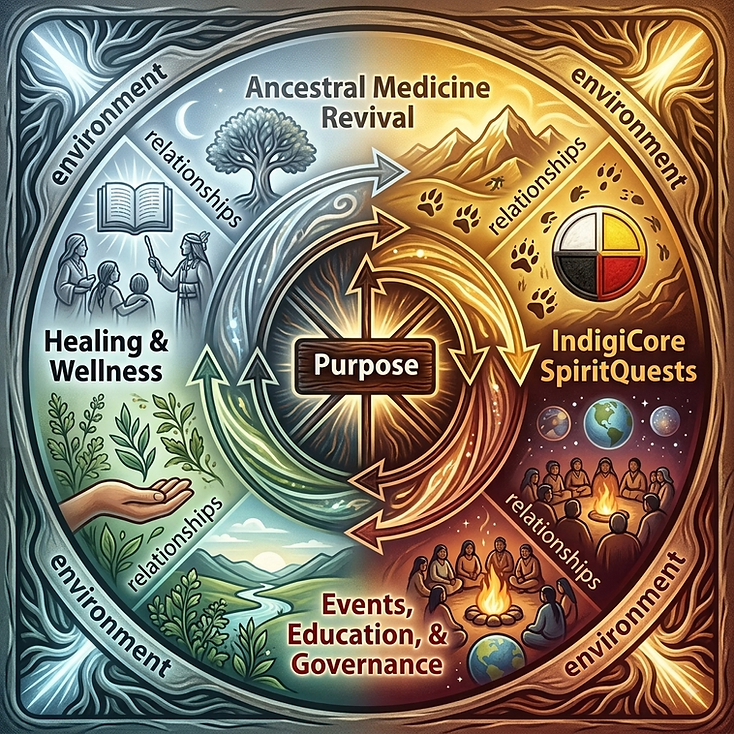

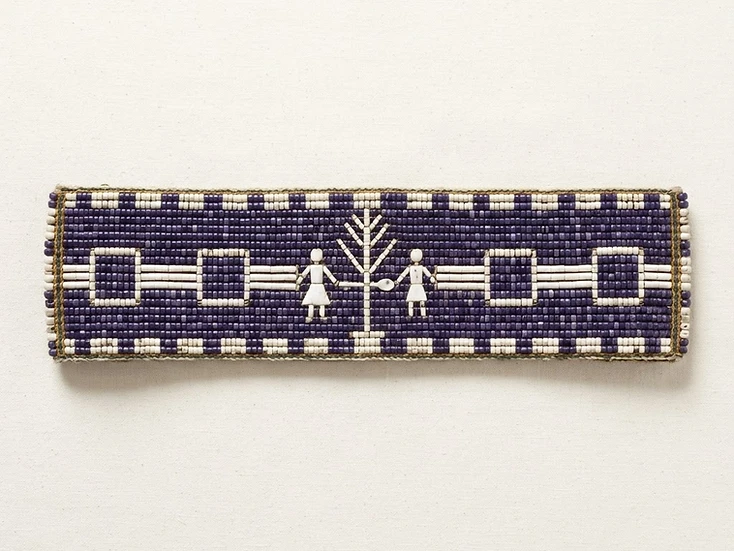
A living constitution united distinct nations
Known as Gayanashagowa, the Great Law was carried in oral memory and encoded in wampum belts - a law intended to remain alive through practice.
A single, living thread
Read top to bottom - eight clauses of Gayanashagowa, each with a teaching to listen for.
- 01Clause 2
The Roots of Peace
Roots spread from the Tree of the Great Peace to the north, east, south, and west. Their nature is Peace and Strength. Those outside the Five Nations who follow the Great Peace with clean minds and obedience to the Confederate Council may take shelter beneath the Tree of the Long Leaves.
Listen ForPeace can extend beyond the original union. Belonging is tied to conduct, responsibility, and a shared commitment to peace.
- 02Clause 5
Deliberation & Review
The Mohawk council is divided into three parties. The first and second discuss the matter; the third listens, identifies errors, and — when the case is properly decided — confirms it. The matter then passes to the Seneca Lords, and on to the Cayuga and Oneida Lords on the opposite side of the house.
Listen ForThe process builds reflection and error-checking into governance. Authority moves through stages; agreement is tested across distinct bodies.
- 03Clause 16
A Law That Can Grow
If future conditions call for an addition or change, the matter must be carefully considered. If a new beam is necessary or beneficial, it is voted upon; if adopted, it is called “Added to the Rafter.”
Listen ForContinuity does not mean rigidity. The law includes a disciplined path for adaptation.
- 04Clause 24
Leadership as Service
Chiefs shall be mentors of the people. Their skins must be “seven spans” thick — proof against anger, offense, and criticism. Their hearts should hold peace and goodwill; their minds should yearn for the welfare of the people. With endless patience, firmness is tempered by tenderness.
Listen ForLeadership requires emotional steadiness, patience, and care for the whole.
- 05Clause 92
Defending the Peace
A nation that seeks to destroy the Great Peace by neglecting or violating its laws, or resolves to dissolve the Confederacy, is deemed guilty of treason and an enemy of the Confederacy and the Great Peace.
Listen ForPeace is not passive: the shared constitutional order carries obligations and consequences.
- 06Clause 93
The Voice of the People
When a great emergency threatens the entire body of Five Nations, the Lords must submit the matter to the people. The people’s decision affects the Confederate Council and confirms the voice of the people.
Listen ForIn existential questions, legitimacy returns directly to the people.
- 07Clause 94
A Council Fire for Men
The men of every clan shall keep a Council Fire ever burning. When needed for the welfare of the clans, they may gather at the fire. This council holds the same rights as the council of women.
Listen ForCommunity deliberation remains ready, local, and reciprocal.
- 08Clause 95
A Council Fire for Women
The women of every clan shall keep a Council Fire ever burning. When the people’s interests require it, they hold council; their decision and recommendation are introduced before the Council of Lords for consideration.
Listen ForWomen’s collective judgment has a formal route into confederate governance.

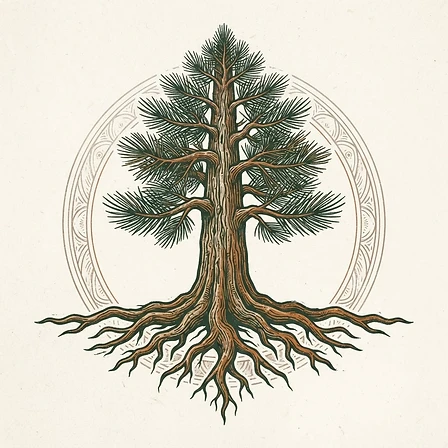
Those who follow the Great Peace may take shelter beneath the Tree of the Long Leaves.
Principles guiding American democracy
Long before 1776, Native nations sustained a democratic federation guided by natural law, relationality, consensus, and cooperation.
Peace
Harmony as the foundation of collective life.
Equity
Justice and welfare extended to all.
Power
Authority drawn from unity and consent.
Health
Well-being and governance are inseparable.
Long View
Decisions honor the generations to come.
Gratitude
Connection renewed through practice.
Deliberation
Listening, patience, and consensus.
Interdependence
Humanity held within the web of life.

We were instructed to carry love for one another and to show great respect for all beings of the earth. In our ways, spiritual consciousness is the highest form of politics.
A visible imprint in early American thought
Colonists encountered an established federal union on Turtle Island - and contact turned abstract ideas into political blueprints.
Canassatego
At a treaty council, the Haudenosaunee leader advised the colonies: Our wise forefathers established union and amity between the Five Nations. We are a powerful Confederacy.
Cadwallader Colden
He described an independent republic whose authority rested in public opinion, wisdom, integrity, and esteem - not force or profit. They have outdone the Romans.
Benjamin Franklin
Franklin attended councils and studied how diverse nations united without coercion. His Albany Plan proposed a federation the plan of the Iroquois.

Recognition came late - and remains incomplete
1988. The U.S. Senate acknowledged that the union of the thirteen colonies was influenced, in part, by the political system of the Iroquois Confederacy.
Yet Haudenosaunee contributions remain absent from many textbooks and public narratives. The teaching persists through Indigenous educators, sovereignty arguments, ceremony, memory, and governance.
Governance is with and for the natural world
Past, present, and future are held together. Trees, rivers, winds, ancestors, and children yet to be born belong within the circle.
In our thinking, we consider the impact of our decisions on the next seven generations. This is the foundation of our governance - taking responsibility for the future, not just the present.
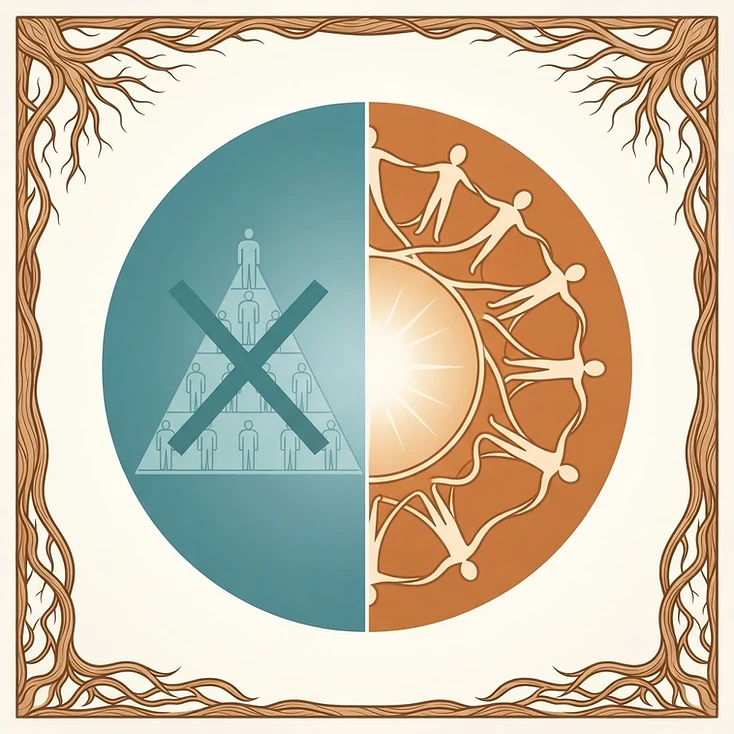
The law of nature is the law of life. Our government is a circle - not a pyramid.
Clan mothers hold constitutional authority
Of 117 clauses in the Great Law, 23 address the rights and responsibilities of women - a dimension the U.S. Constitution never enshrined.
- →Descent follows the female line.
- →Women are progenitors of the Nation.
- →Women hold the land and the soil.
- →Clan mothers nominate leaders - and may remove those who lose the people’s confidence.
- →Women’s councils carry recommendations into the Council of Lords.
The Confederacy endures
The lands were seized. Treaties were broken. Systems were dismissed. And yet - the Confederacy still exists, the Great Law is still recited, clan mothers still name leaders, and the longhouse fire still burns.
A system that professed liberty drew from people it then sought to erase - and the teachings endured.
Carry the teaching forward
The Great Law of Peace is one strand of a larger hoop. Explore our education curriculum, the Four Directions mission, and the regenerative work it inspires.
Read the Great Law in its entirety
This page holds eight of the Great Law’s teachings. The full Constitution of the Iroquois Nations — the Great Law of Peace, Gayanashagowa — is a living document of one hundred and seventeen wampum strings, recited and remembered across generations.
Beyond what is gathered here, the complete text holds the planting of the Tree of Peace and the keeping of the Council Fire; the rights, duties, and qualifications of Lords; the rituals of installation, mourning, and the Requickening Address; the laws of adoption, emigration, and the rights of foreign nations; the conduct of War Chiefs and the defense of the Peace; the removal of Lords and the law of treason; and the rights of women — the clan mothers who hold, nominate, and may withdraw the titles of leadership.
It is a record of how distinct nations agreed to live as one — a thread of peace carried in memory, wampum, and practice.
www.treeoflight.earth/convergence
Sign up for our Newsletter
Receive updates on activities, projects, progress, opportunities, and highlights from the Tree of Light community.
Sign up for updates